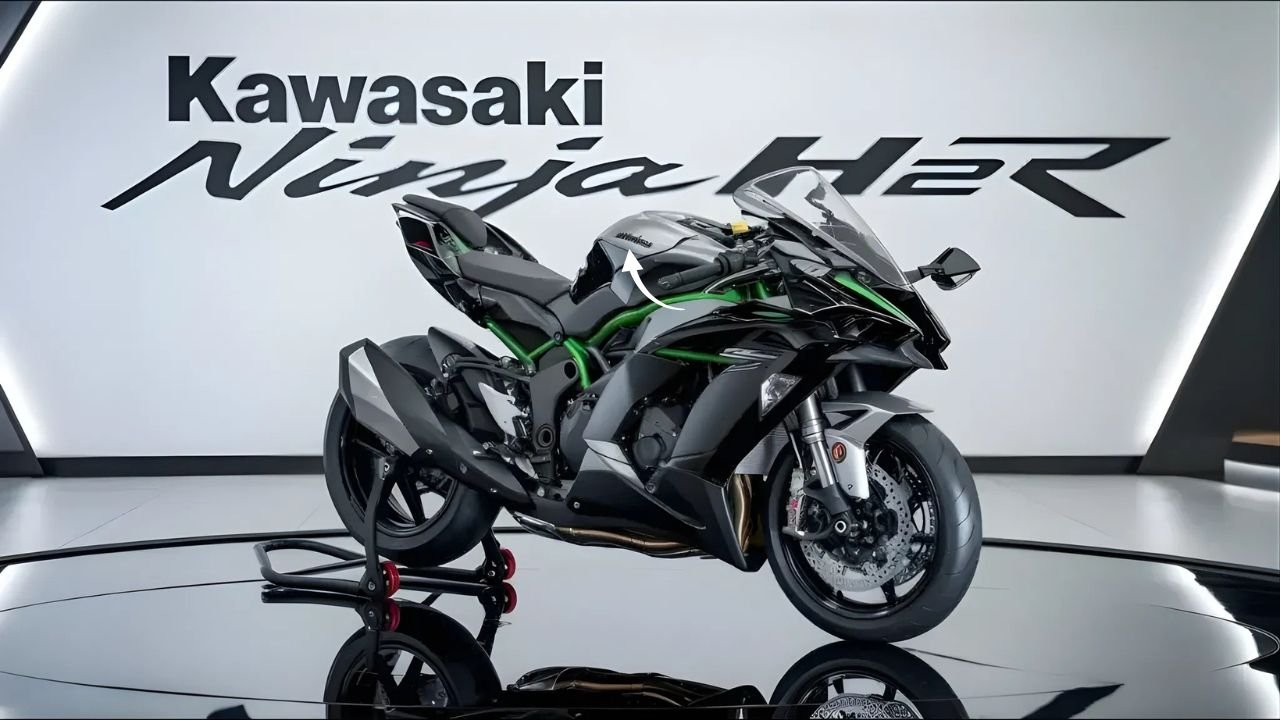
The launch of the 2026 Kawasaki Ninja H2 R has generated massive excitement in the global superbike community. Known for its extreme performance and futuristic engineering, the Ninja H2 R has always represented the pinnacle of track-focused hyperbikes. With the 2026 version, Kawasaki has refined the machine further, bringing improvements in engine performance, aerodynamics, and advanced technology.
Designed purely for the racetrack, the new Ninja H2 R continues to push the boundaries of motorcycle engineering. Kawasaki’s goal with this update is not only to enhance speed and power but also to deliver improved control, efficiency, and rider confidence at extreme performance levels.
Design evolution with aggressive hyperbike styling
The 2026 Ninja H2 R continues Kawasaki’s signature hyperbike design philosophy. The motorcycle features an aggressive aerodynamic body structure that not only looks futuristic but also plays a major role in enhancing high-speed stability. The sharp fairings and sculpted body panels help manage airflow more efficiently.
One of the most iconic elements of the Ninja H2 R remains its aerodynamic winglets. These winglets generate downforce at high speeds, improving grip and control during track riding. The exposed trellis frame and polished metallic finish continue to give the bike its distinctive and premium visual identity.

Refined supercharged engine delivering extreme performance
At the heart of the 2026 Ninja H2 R lies a refined version of Kawasaki’s legendary supercharged engine. The hyperbike is powered by a high-performance 998cc inline-four engine that uses a centrifugal supercharger to produce extraordinary power levels. This technology is a major reason why the H2 R stands among the most powerful motorcycles ever built.
For 2026, engineers have focused on improving internal components, cooling efficiency, and throttle response. These refinements aim to deliver smoother power delivery while maintaining the incredible top-end performance that the Ninja H2 R is famous for on the racetrack.
Advanced aerodynamics for high-speed stability
Aerodynamics play a crucial role in a hyperbike like the Ninja H2 R, especially when it reaches extreme speeds on a track. The 2026 model features updated aerodynamic elements that improve airflow management and reduce drag during high-speed riding.
The redesigned front fairing and refined winglet structure help generate additional downforce. This allows the motorcycle to remain planted on the track even during aggressive acceleration and high-speed cornering, giving riders more control and confidence.

Modern electronics and track-focused technology
The Ninja H2 R has always been more than just a powerful machine. Kawasaki has equipped the 2026 model with a range of modern electronic systems designed to help riders handle the immense power of the bike safely and efficiently.
These systems include advanced traction control, launch control, cornering management, and multiple riding modes tailored for track conditions. The electronics continuously monitor wheel speed, lean angle, and throttle input to optimize performance in real time.
Improved chassis and suspension setup
Handling is just as important as raw power in a hyperbike. The 2026 Ninja H2 R features a refined chassis setup designed to provide maximum stability and precision during high-speed riding. The lightweight trellis frame continues to play a key role in maintaining rigidity without adding unnecessary weight.
The suspension system has also been tuned for better responsiveness on the track. High-performance front forks and a race-focused rear suspension help absorb bumps and maintain stability during intense acceleration, braking, and cornering situations.

Braking system designed for extreme track performance
With the kind of speed the Ninja H2 R can achieve, braking performance becomes critically important. The 2026 model uses a high-end braking system designed specifically for track-level performance and safety.
Large performance brake discs paired with advanced calipers provide exceptional stopping power. Combined with sophisticated braking electronics, the system ensures better control and stability even when the rider needs to slow down from extremely high speeds.
Lightweight engineering and performance materials
Another key focus for the 2026 Ninja H2 R is weight optimization. Kawasaki has used lightweight materials throughout the motorcycle to ensure that the bike maintains the best possible power-to-weight ratio.
Carbon fiber components and carefully engineered metal alloys contribute to reducing weight without compromising durability. This approach helps the bike achieve faster acceleration, sharper handling, and improved overall performance on the track.

Exclusive production and hyperbike legacy
The Ninja H2 R is not designed as a mass-market motorcycle. It is an exclusive machine built for serious collectors, professional riders, and track enthusiasts who want the most extreme performance available in the motorcycle world.
The 2026 update continues the legacy of the Ninja H2 R as one of the most technologically advanced and powerful hyperbikes ever created. Each generation strengthens Kawasaki’s reputation as a brand that pushes engineering limits in the pursuit of speed and innovation.
Conclusion
The 2026 Kawasaki Ninja H2 R represents the ultimate expression of track-focused motorcycle engineering. With a refined supercharged engine, improved aerodynamics, advanced electronics, and a lightweight performance-focused design, the hyperbike continues to set new benchmarks in the world of high-performance motorcycles.
While it remains an exclusive track-only machine, the Ninja H2 R showcases Kawasaki’s commitment to innovation and extreme performance. For enthusiasts who admire cutting-edge engineering and unmatched speed, the 2026 Ninja H2 R stands as one of the most extraordinary motorcycles ever built.